This page has affiliate links. If you click and buy something, EitM might earn a small commission, at no extra cost to you, the reader. As always, thanks for reading.
Tasi Tolu, Becora and Taibessi: Dili Bus Terminal Guide
Moving from one point of Timor-Leste to another can be an enlivening venture that adrenalises the unprepared. Tasi Tolu breeds such excitement.
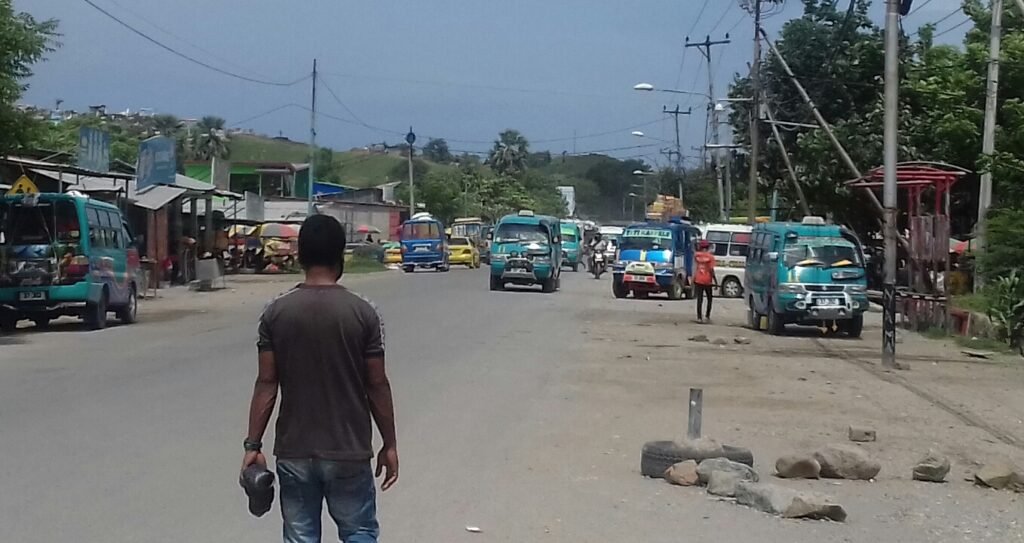
Less of a terminal and more of a congregation, Tasi Tolu is the transport gateway to all points west in Timor-Leste. The theory is simple: Indonesian-style bemo and mikrolet minvans wait for passengers before heading to Liquiçá, Gleno, Ermera, Balibo, Maliana and beyond. A simple, straightforward transaction.
The reality can prove slightly different. Visitors should not worry if they find the terminal, on the outskirts of Dili, a touch overwhelming. It is, after all, controlled chaos. With transport whizzing around as touts jostle for passengers, the whole experience can unnerve even the hardiest visitor.
It can be loud, too. Indeed, it is possible to feel a vehicle’s presence, the bassy vibrations from monstrous sound systems rattling rusty frames and tooth fillings alike.
Read More: Soak up the quiet at Watabo’o Beach, one of Timor-Leste’s quieter corners.
Getting in an empty vehicle can be a double-edged sword. There may be space to stretch out, but then the drivers will demonstrate the art of killing time as they scour for custom. An hour or so of this can be a trying experience for even the most patient of passengers. Factor in the heavy humidity compounded by a lack of air conditioning, and no wonder tempers can fray at Tasi Tolu.

However, this is not to say the process is a negative one. Far from it. As visitors learn a few hacks – be it tapping a coin on the handrail when their stop appears or getting a feel for when transport is genuinely about to leave – they will feel the country opening up to them.
EitM’s advice: Enjoy the ride.
Dili bus terminals + mikrolets: basic info
- Trips should cost $5 to $12, depending on location. Always check the price before departing
- Make sure to have centavo coins or small denomination US dollars
- Vehicles [buses, vans or anggunna cargo trucks] depart for their destinations between 3 am and 8 am. They don’t set off until they’re full, which can mean driving around the terminal for a long time as conductors try to drum up custom
- If a vehicle’s empty, there’s a good chance you won’t be going anywhere any time soon. The best bet is to find transport that’s already got passengers, and ideally a lot of them. That means it’s more likely to leave
- Mikrolet vans serve each terminal, as do taxis
- The general form is to wave down a passing van and climbing in the side door. The vehicles are often cramped, so, in order to get comfy or find a place to sit, expect to perform some bodily contortions your muscles might not thank you for later on
- Trips cost $0.25 – to stop a van, tap the metal handrail [best bet is to use a coin] or say ‘para’. The coin option feels more satisfying
- Mikrolets run between 6 am and 6 pm
- This Dili mikrolet map is supremely useful
- On a related topic, it would be a wise move to know some basic Tetun, especially numbers. While not much bargaining takes place, the terminals tend to be frenetic places, and minor details such as prices can get lost in the maelstrom
Tasi Tolu / Western terminal
- For routes heading west
- Get there using mikrolets 1 or 7
- Destinations: Balibo, Ermera, Gleno, Liquiçá, Maliana, Batugade [for the Indonesian border]
Mota Ulun Becora / Eastern terminal
- For routes heading east
- Get there using mikrolets 1 or 2
- Destinations: Baucau, Lospalos, Manatuto, Viqueque
Taibessi / Central + Southern terminal
- For routes heading to the southern coast and central highlands
- Get there using mikrolets 4, 5, 7 or 8
- The terminal is near the market place, which is where the vans tend to drop off passengers
- Destinations: Aileu, Maubisse, Same, Suai
- This is the place to depart from if heading for Mount Ramelau – get off at Hatu-Builico junction
- Anggunna cargo trucks leave for the junction between 6 am and 8 am. The journey is about three hours and costs approx. $4. Expect delays due to flooding and poor roads
- As is the custom, the trucks don’t leave until they are completely full, which tends to mean both people and market goods, so it pays to expect cramped conditions and unusual seating arrangements
- It’s a communal atmosphere and not particularly claustrophobic, but be warned – travelling on an anggunna can expose a visitor to some harsh realities, of the kind found not just in Timor-Leste but the world over
- On our way to Maubisse, via a beautiful winding road that snaked through the mountains, we spied an inconspicuous package in the truck, lying perfectly still. Market bounty, we presumed. But then, the package suddenly jolted, wet itself and squealed. We recognised the sound straight away: the uncontrollable, shrill wail of a captive pig beset by panic. It was a disconcerting noise that sounded uncannily like a cry for help. But this outburst did nothing to change the animal’s fate: the pig, its now-visible snout sniffing frenzedliy in the air, remained tied up and blinded by a hessian sack. Before we had time to fully process the situation, the truck stopped and a chortling somebody picked up the animal, hopped down to the road and wandered off with the now-hyperventilating package on their back. It was an unexpectedly unsettling episode, and a reminder that we were far removed from a familiar way of life
- This is the place to depart from if heading for Mount Ramelau – get off at Hatu-Builico junction
(2026 update: This story first appeared in 2018, so prices, destinations and the like may have changed)
Discover more from Eye in the Middle
Subscribe to get the latest posts sent to your email.