This page has affiliate links. If you click and buy something, EitM might earn a small commission, at no extra cost to you, the reader. As always, thanks for reading.

Qing Xin Ling Leisure and Cultural Village: Serene Time Travel in Ipoh
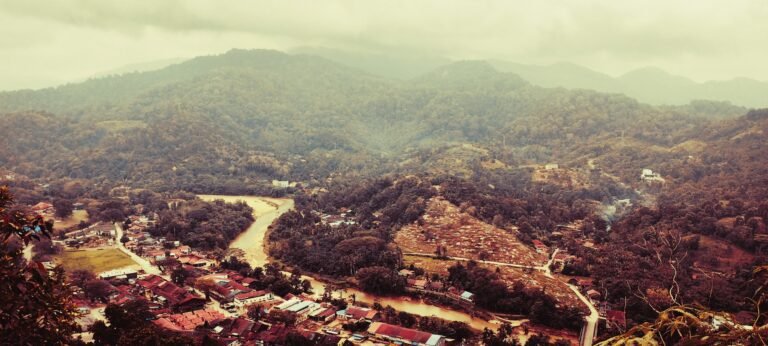
Ensconced amongst towering white cliffs on Malaysia’s western peninsula, Ipoh is a town characterised by its colonial past under British rule and former standing as a mining hotspot of some repute. At the town’s heart lies Qing Xin Ling Leisure and Cultural Village.
2026 update: The centre closed in 2024 after a fatal rockfall. As of 2026, it’s unclear whether that’s changed – make sure to confirm before visiting
Ipoh is a handsome, rugged place. There, jagged limestone karsts jut out of the earth as though jabbed by some subterranean elemental force. Pocketed within these peaks are intricate temples and traditional centres that seem to intensify the magnificence of their surroundings.
One such site is Qing Xin Ling Leisure and Cultural Village. The site enjoys a calm setting. It intrudes in and around the karsts, which creates a preternatural stillness. An apt link, given that Qing Xin Ling translates as ‘serene hills’ from the original Mandarin.
Language Suggestion: Knowing a bit of Malay will certainly help on a trip to Qing Xin Ling. We do suggest some fluency and confidence for those who want to use Malay as an additional language, though.
Many’s the time across Malaysia we’ve found that a Malaysian person, when speaking to obvious foreigners, defers to speaking English almost immediately. But we also appreciate that these same people might be in a hurry, and humouring an outsider as they stumble through an unfamiliar language [in this case, Malay] can be pointlessly time-consuming.
Thus, it seems that the best way to use Malay, at least until you become a natural-sounding speaker, is to employ short, sharp, opportunistic bursts, like a piranha nipping in to feed on a whale’s carcass. That way, you can get some quick practice before the chat reverts to a more mutual, common language. Please see EitM’s Malay Language Primer, if you so wish, for help with the basics.
NB: You’d be correct in assuming this is the exact same note as in our Kek Lok Tong story
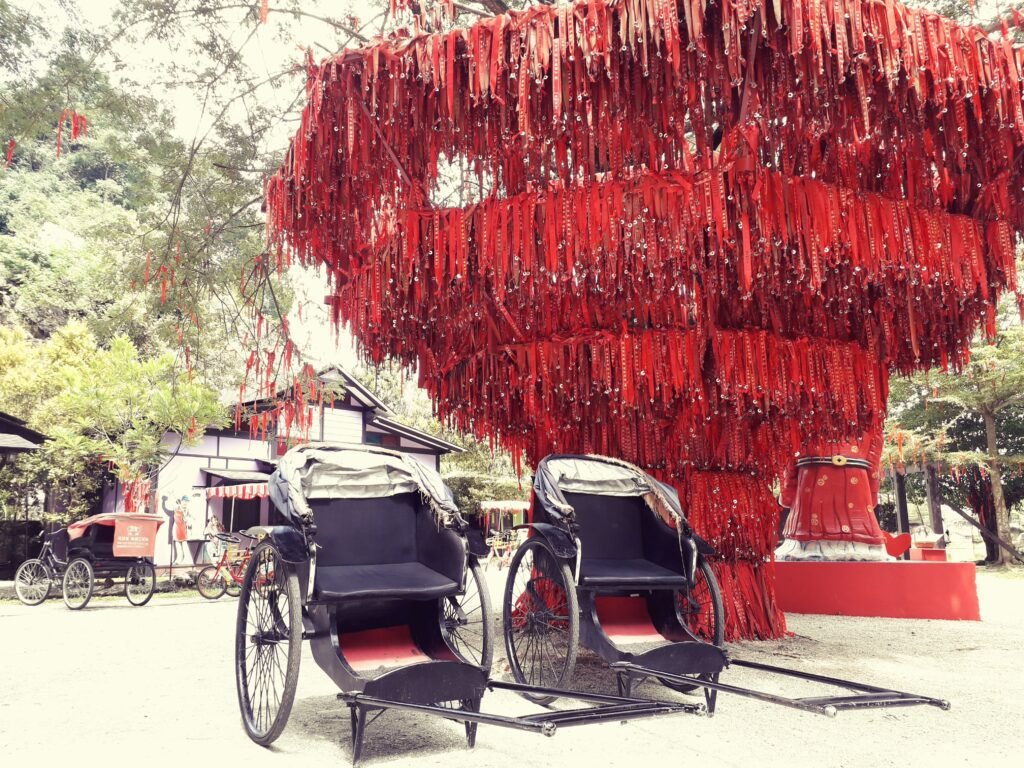
The village enshrines a lake which acts as an emerald-hued, peaceful centrepiece announced by a series of pandok summerhouses. But the most striking view, at least initially, is the banyan wish tree. Here, visitors record innumerable pledges and yearnings on red ribbons and drape them across its branches, set companionably beside a statue of Caishen, the Chinese god of fortune.
Nostalgic feel
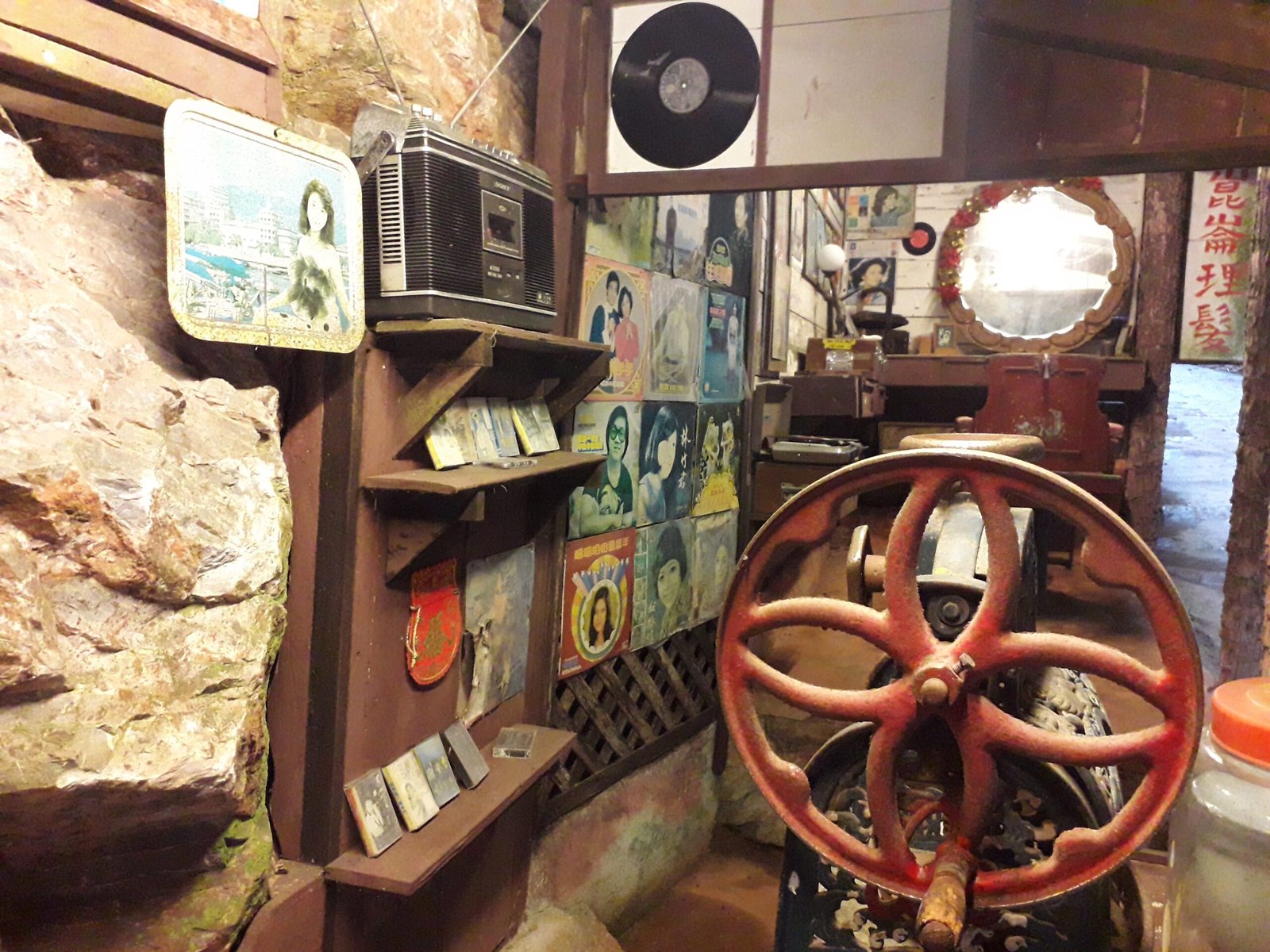
And from there, the centre opens up. A fine filament of dust follows in the wake of bicycles and traditional Chinese rickshaws as they trundle past a facsimile village. The feeling conveys a sense of sepia yearning. One may see the homes and shops of yore, replete with nostalgic memorabilia. Black and white photos, radios, TV sets, a jukebox and an ice shaver add further glimpses into the past.
A turn around the lake casts continues this backwards glance. The shell of an antique car resides within eyeshot of a boat installation. Both things, despite their seeming incongruity, sit in perfect stillness amongst the surrounding jungle. Here in Qing Xin Ling, nature and culture blend seamlessly together in a way that brings to mind the dreamlike gardens of El Explorador in Boquete, Panama.
And thus does the trawl through history continue. A winding narrow passageway, Memory Lane, stabs into the limestone cliffs. The attendant windmills and reenactments of street stalls, completed by authentic props including Malay vinyl, barbershop gear and a coffee grinder, render an indelible image of life as it once was.
Things to know
Lokasi and opening hours
- Address: 22A, Persiaran Pinggir Rapat 5a, Taman Saikat, 31350 Ipoh, Perak
- Opening hours: Monday to Saturday, 9 am to 5 pm. Closed on Sundays and public holidays
- Admission: 12MYR for Malaysians, 20MYR for international visitors. Free for OKU [Orang Kurang Upaya] / PwD [Persons with Disabilities]* and children under 7
- NB: That’s probably worth confirming elsewhere, just to be sure
- *There’s a debate in Malaysia over ableist language and whether ‘specially abled / different abilities’ or ‘disabilities’ should be used in contexts like this. One side considers ‘specially abled / different abilities’ patronising, the other finds ‘disabilities’ to be too much of a stigma that suggests the person is broken. EitM are all for inclusivity but we also don’t want people to feel patronised, so we don’t know where we stand in this complex, nuanced situation
- Arrive early to beat crowds and avoid excessive midday heat. Failing that, aim for a late-afternoon visit, about 3 pm, to make use of the fading light [nice, moody photos] and cooling weather
- Weekdays are less busy than weekends
- 2026 update: The site was closed in 2024 after a fatal rockfall – that might well still be the case, so make sure to check before visiting. A quick search on Google marks it as permanently closed
Getting there and away
- Reaching Qing Xin Ling isn’t really possible on foot because it involves walking along some busy main roads that aren’t conducive to a peaceful stroll
- Hitch-hiking’s an option, but we have no experience of that and can’t offer any type of lowdown
- Taxis are the most reliable choice. The Grab app works fine, or at least it did when we were there in 2020. We stayed close by, so we paid the minimum charge of 5MYR [plus a tip]. It’ll probably cost approx. 10MYR from the centre of Ipoh
- Ipoh‘s got enough of a tourist scene that transport will always be visible
- 2026 update: There’s good chance the centre is closed. But fear not, for the cave temple of Kek Lok Tong is close by and a more than interesting alternative, and it would still cost the same to get there, give or take a couple of ringgit
Accommodation / Food and drink
- The Hill Times Inn Hotel on Medan Soon Choon 1 is a decent budget option close to Kek Lok Tong. An ensuite double room with WiFi costs approx. 80MYR / £15 a night. Be aware that not every room has a window. Also remember that there’s an additional tourist tax of 10MYR per person per night – doesn’t apply to Malaysians or permanent residents
- There are a lot of decent restaurants, bakeries and cafes close by, which act as a reward for wandering around the area in a vague direction and seeing what turns up
- Kannamahs Kitchen on Medan Lapangan 2 serves up an excellent choice of Indian and Malay food in generous portions
Where next
- Kek Lok Tong: A serene Buddhist cave temple with many magnificent statues, a relaxing garden and an overwhelming feeling of calm bliss. Read here for our lowdown
- Malacca: A historic trade centre and UNESCO world heritage site with a vivid colonial past, impressive architecture and colourful skin. A beer on the canal here is one of Malaysia‘s unexpected treats. Read EitM’s [very] vague guide here
Take a Look: EitM’s Malaysia / Borneo archive
Discover more from Eye in the Middle
Subscribe to get the latest posts sent to your email.