This page has affiliate links. If you click and buy something, EitM might earn a small commission, at no extra cost to you, the reader. As always, thanks for reading.

Malacca: A Crucial Centre of Trade in Malaysia
The tale of Malacca, the fishing village that rose to become an integral part of the trading loop in Asia.
Malacca City enjoys a standing of some historical importance in Malaysia. The capital of the state that shares its name once stood as the fulcrum of a powerful Malay kingdom. It then attracted the attention of Portuguese, Dutch and British colonialists in the 15th century.
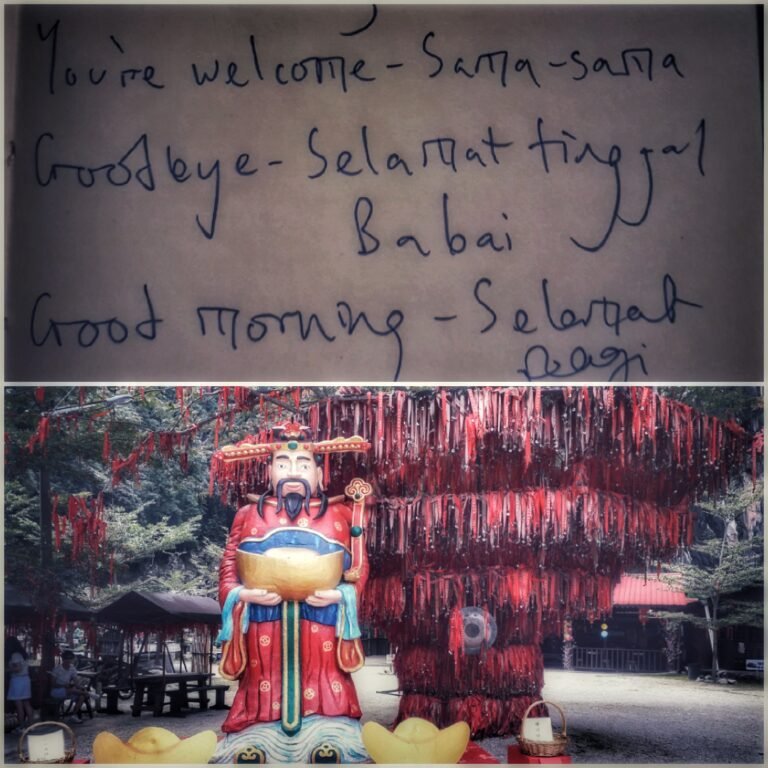
Language Suggestion: Knowing a bit of Malay will certainly help on a trip to Kek Lok Tong. We do suggest some fluency and confidence for those who want to use Malay as an additional language, though.
Many’s the time across Malaysia we’ve found that a Malaysian person, when speaking to obvious foreigners, defers to speaking English almost immediately. But we also appreciate that these same people might be in a hurry, and humouring an outsider as they stumble through an unfamiliar language [in this case, Malay] can be pointlessly time-consuming.
Thus, it seems that the best way to use Malay, at least until you become a natural-sounding speaker, is to employ short, sharp, opportunistic bursts, like a piranha nipping in to feed on a whale’s carcass. That way, you can get some quick practice before the chat reverts to a more mutual, common language. Please see EitM’s Malay Language Primer, if you so wish, for help with the basics.
As is the way of such things, Malacca rose to prominence from understated beginnings. In this case, the trajectory of a simple fishing village aligned with that of Parameswara, the final Raja of Singapura and founder of the Malacca Sultanate, after a Majapahit attack in 1377.
The Raja found his way to Malacca in 1400. He noted the strategic importance, both commercially and defensively, of this village on the narrowest point of the Malacca Strait. As Malacca developed, so did its position as a trading port. Eventually, it became one of the most pivotal in Southeast Asia. The river’s prominence also gained Malacca an apt nickname: ‘The Venice of the East’.
Malacca now and then
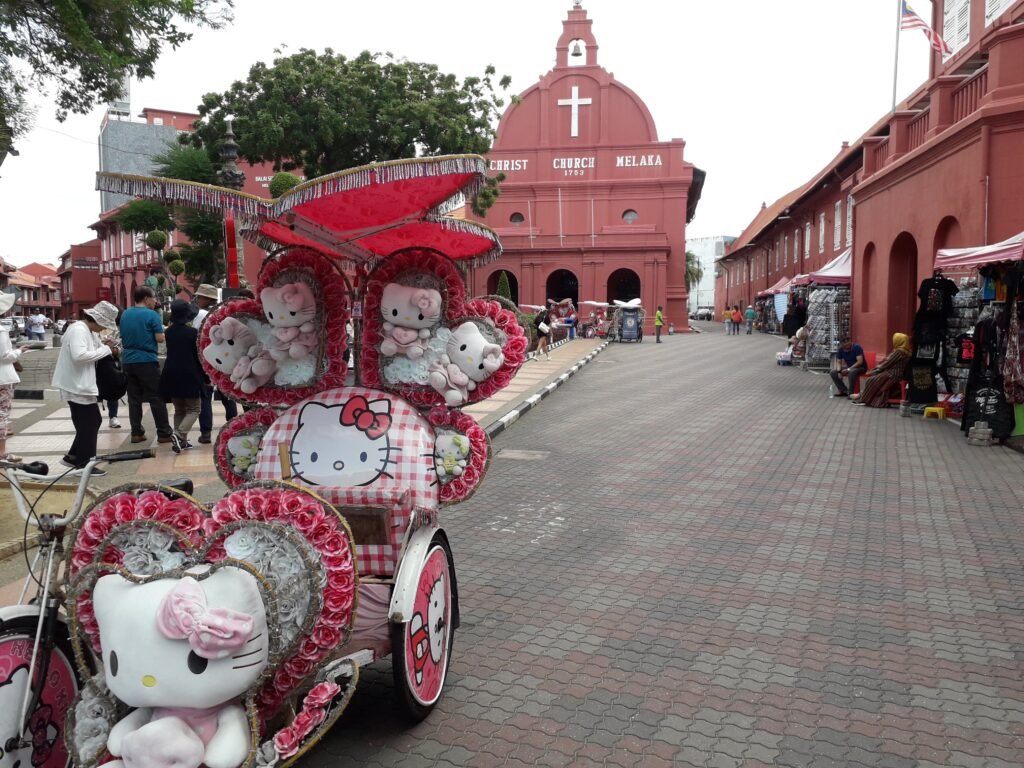
The Malacca of today continues to resonate. Stories of the past merge with the colourful street art of modern times to highlight how the city straddles two eras. The colonial period is particularly evidenced by Dutch Square, for example. Here rests the 18th-century Anglican Christ Church, the oldest functioning Protestant church in Malaysia, constructed between 1741 and 1753 in the then-prominent Dutch architectural style.
The area is one of absolutes, as evidenced by Stadthuys, Southeast Asia’s oldest Dutch building. Constructed by the Dutch in 1650, its characteristic red exterior has since become one of Malacca‘s iconic sights. Equally striking is the Tang Beng Swee Clock Tower, built in 1886 and the meeting point of the colourful tri-shaws that patrol Malacca’s streets.
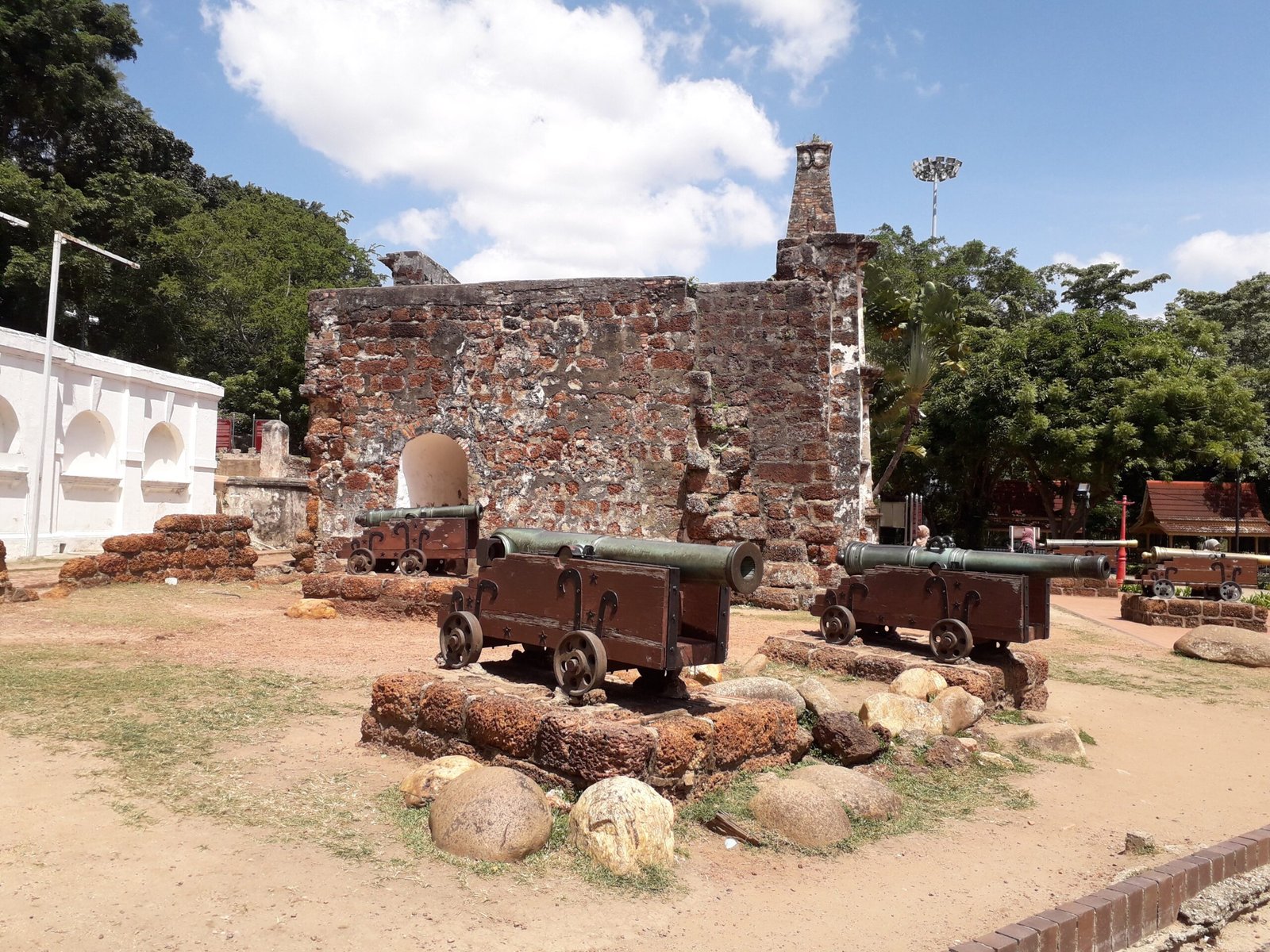
From a strategic viewpoint, the A Famosa gate, erected in 1512, was the region’s tallest building until its destruction in 1641. The gate bears witness to the old Portuguese and Dutch occupation. It earned its name as the sole remaining tower of the old forts that overlooked the city.
The forts themselves came to an end when the British, by then in control of Malacca, sensed the turning tide of the Napoleonic Wars. They knew the city would return to Dutch control. Thus, the occupiers took affirmative action and destroyed the city walls to make Malacca indefensible.
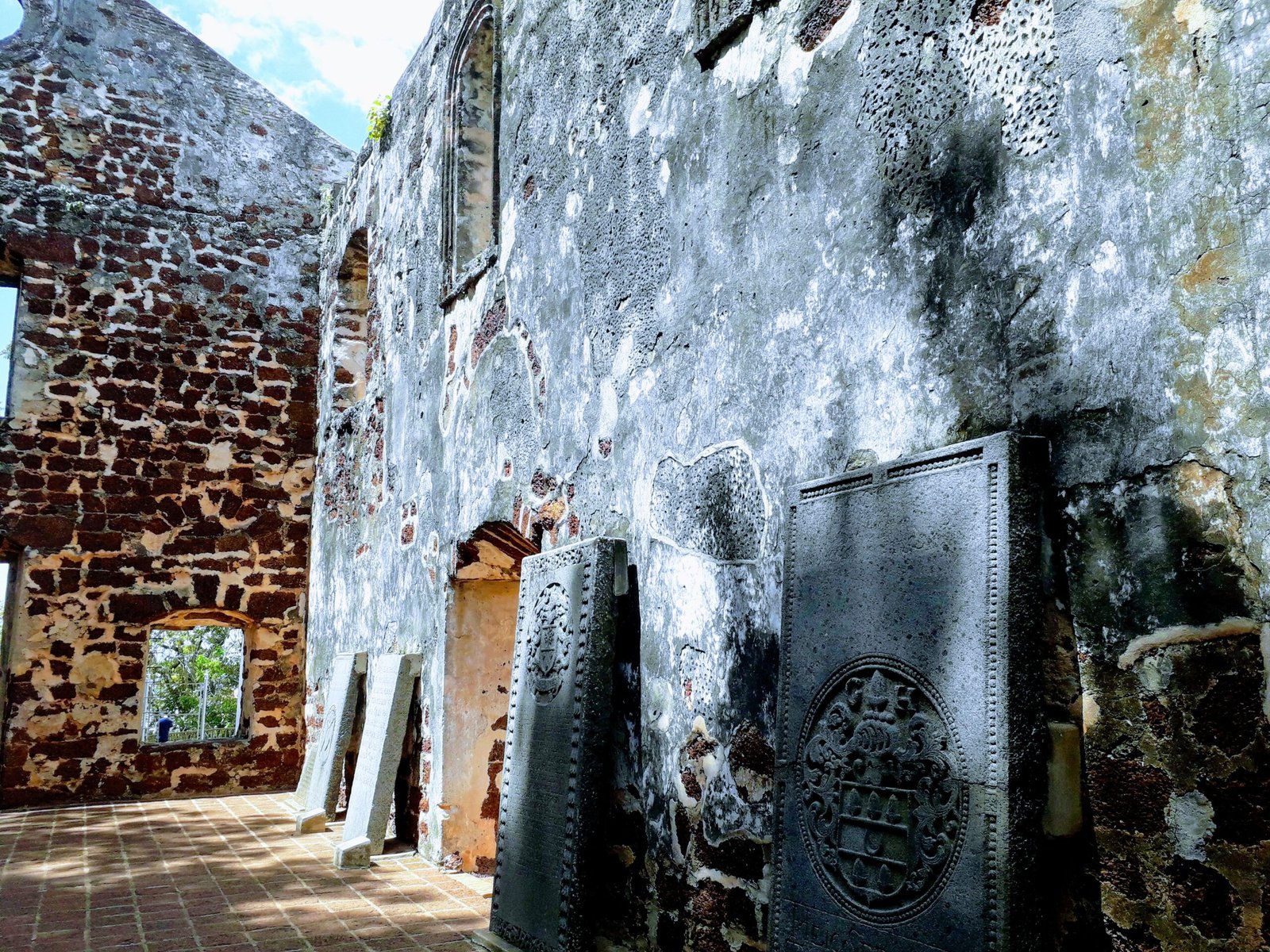
The ghosts of conflict continue to haunt St Paul’s Church, perched atop the hill overlooking the fort. The ruined church was built in 1521 and ranks as the oldest such building in Malaysia and Southeast Asia. In times of conflict, however, it took on a new role as it underwent deconcentration and structural modification as part of the fortifications of Malacca.
Things to know
Getting there and away – buses
- Buses from Kuala Lumpur are reliable. They leave from both Terminal Bersepadu Selatan (TBS) and KLIA/KLIA2 airports and arrive in Melaka Sentral. Journeys takes between two and three hours
- Buses costs approx. 11 to 20MYR
- There are self-service ticket machines at TBS which are easy to navigate
- That said, leave plenty of time. The machines don’t always work and they can confuse people not used to using them, causing unexpected delays
- TBS has many counters, the staff are helpful, there are plentiful buses and information is made very clear [departure boards, etc]
- But the place can also get hellishly busy, especially at weekends and during peak periods, so get there early and have a vague idea of bus times and availability before setting off – it’s a good idea to have a couple of backup options
- It’s all fairly anxiety-inducing for people in a rush or those who like to keep in total control of their itinerary
- Buses also serve Malacca from across Malaysia. In our experience, bus travel in Malaysia is the best in Southeast Asia in terms of organisation, clarity and reach. There are ways to get everywhere from everywhere
- Thus, there’ll either be a direct bus to Malacca or it’ll be made clear where to change
- Have your passport and telephone numbers handy – most, if not all, bookings will need at least one of the two
- Getting away from Malacca is simple. Melaka Sentral bus station is well organised and it’s simple enough to work out where to buy tickets, departure gate locations, and so no
Accommodation / Food
- We visited Malacca in 2020 and stayed in D’Hotel / Hotel Zamburger, which has since disappeared. It was a nice hotel – comfortable double room [approx. 80MYR / £15 a night], reliable WiFi, helpful owners, a couple of food places close by. But it’s vanished, and its likely changed its name, so best of luck finding it
- Somewhere like M Candy Hotel would suit us in 2026 and beyond. It costs approx. 65MYR / £12 a night, there’s WiFi, and it looks like it’s close to the action and a body of water, which is always a bonus
- Remember that there’s an additional tourist tax of 10MYR per person per night – doesn’t apply to Malaysians or permanent residents
- We enjoyed the hotpot restaurants of Malacca. There’s plenty of them around, and the few we tried were consistently good, so we’d happily walk into the first one we found if we ever go back to Malacca.
- They’re a bit pricy though, or at least can be – upwards of 20MYR for a meal
- Jonker Street is a good bet for budget eating, both sweet and savoury – curry, laksa, cendol, nasi goreng, popiah spring rolls and so on
Where next
- Qing Xin Ling Leisure and Cultural Village: A pretty and nostalgic retro-themed park in Ipoh, set in limestone cliffs and rendered peaceful by a soothing lake. Many interesting snapshots of life in Malaysia through the decades. Read our lowdown here
- NB: As of 2026, the site is very possibly permanently closed – make sure to check before visiting
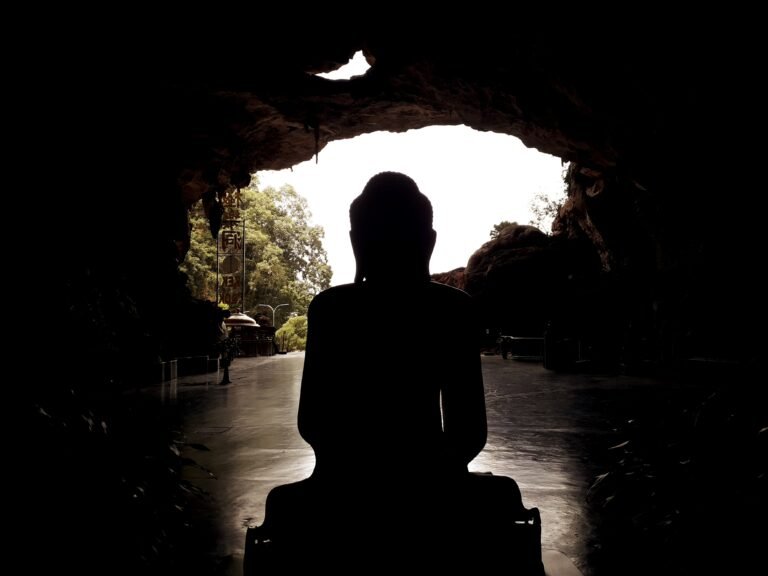
- Kek Lok Tong: A serene Buddhist cave temple with many magnificent statues, a relaxing garden and an overwhelming feeling of calm bliss. Read more here
Discover more from Eye in the Middle
Subscribe to get the latest posts sent to your email.