This page has affiliate links. If you click and buy something, EitM might earn a small commission, at no extra cost to you, the reader. As always, thanks for reading.
North Sulawesi: (Very) Vague Guide
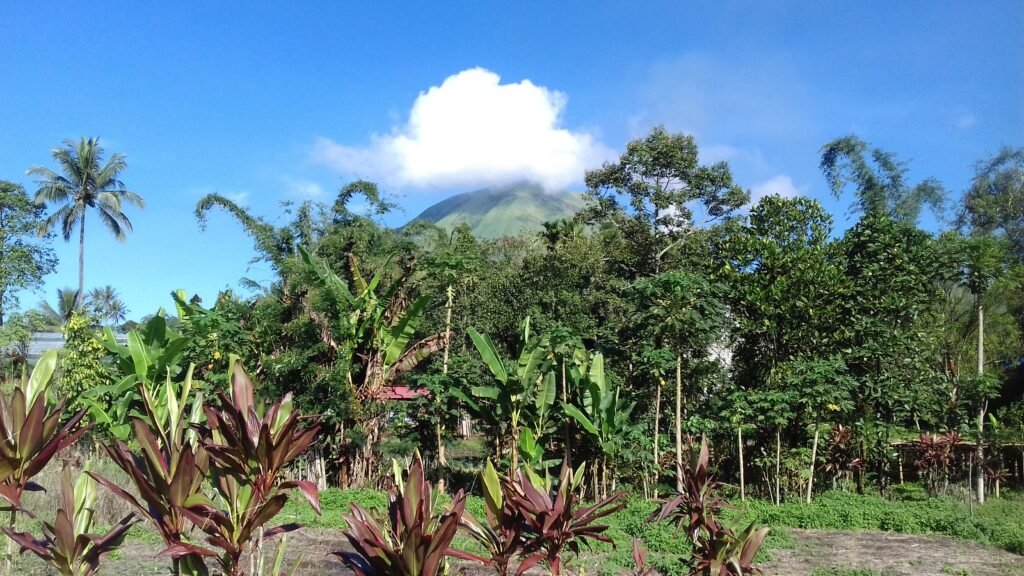
The province of North Sulawesi is an excellent place for those who want easy access to Indonesia’s beautiful landscape.
From the biodiverse waters of Bunaken National Marine Park to Tomohon’s volcanic highspots as well as Tangkoko-Batuangas Dua Saudara Nature Reserve’s diverse array of wildlife, those who visit will traverse one of Southeast Asia’s most pretty regions.
Where is Sulawesi?
Sulawesi is the world’s 11th-largest island. Find it to the north-east of Java and Bali.
How Do You Get to North Sulawesi?
The main transport hub is Manado, with the city’s Sam Ratulangir airport offering domestic and international connections. Gorontalo has also seen an increase in air traffic and can provide a useful link for travellers. Bitung acts as the seaport for Manado. The Pelni ferry fleet stops at ports along Sulawesi’s coastline.
Currency
The rupiah. Expect to pay around 200,000 IDR for a budget room, approx. 20,000 IDR for street food, 2,500 IDR for a bottle of water and 18,000 IDR for a packet of cigarettes. Travel costs will vary depending on the destination. Private transport tends to cost much more than its public counterpart. These prices will likely have fluctuated by the time you read this, so just use them as a vague idea.
Smoking Pro Tip, 2026
Unless you’re a seasoned smoker, don’t go too off-piste when buying cigarettes in Indonesia. Stick to your Sampoernas [any colour – our favourite is ungu] and your LA Ices and your Gudang Garams and your Camel Putihs. Once you start getting into the realms of Chief, Dji Sam Soe and Djarum 76, the cigarettes become far more potent. They are incredibly strong, in short, and genuinely dangerous. Smoking becomes far less of a pleasure and more of a genuine concern when you can feel bits of yourself withering up and dying in real time, which is a feeling evoked by some of the more innocuous-looking Indonesian cigarette brands.
Disclaimer: The best and healthiest idea, of course, is not to smoke at all. For those who do smoke, however, enjoy. Be happy. Go well.
What to do
People use Google, social media and WhatsApp much more for things like accommodation, tours and guides in North Sulawesi these days.
Tomohon
The best thing to do in Tomohon is exhale. It is a pretty town in the highlands of North Sulawesi, an hour so from the region’s main gateway of Manado. In Tomohon, the air is thin and crisp and much of the land is green, which makes for a soothing, calm atmosphere where every sensation is subtly intensfied. The town’s flower gardens, in particular, generate a feeling of intense calm and wellbeing.
A visitor, then, may feel extra-receptive to their surroundings, and find that as they soak up the natural splendour of Tomohon, they pick up details they may otherwise have missed. At Danau Linau, for instance, they may note that the sulfur lake changes colour, taking in the gamut of reds and blues and green and yellows; some have pondered whether a playful imp lives under the lake’s surface and changes the water’s colour to match their mood. Other, more sane, heads put the change down to the chemical reaction between sunlight and sulfur. It is up to the visitor to decide which explanation suits them more.
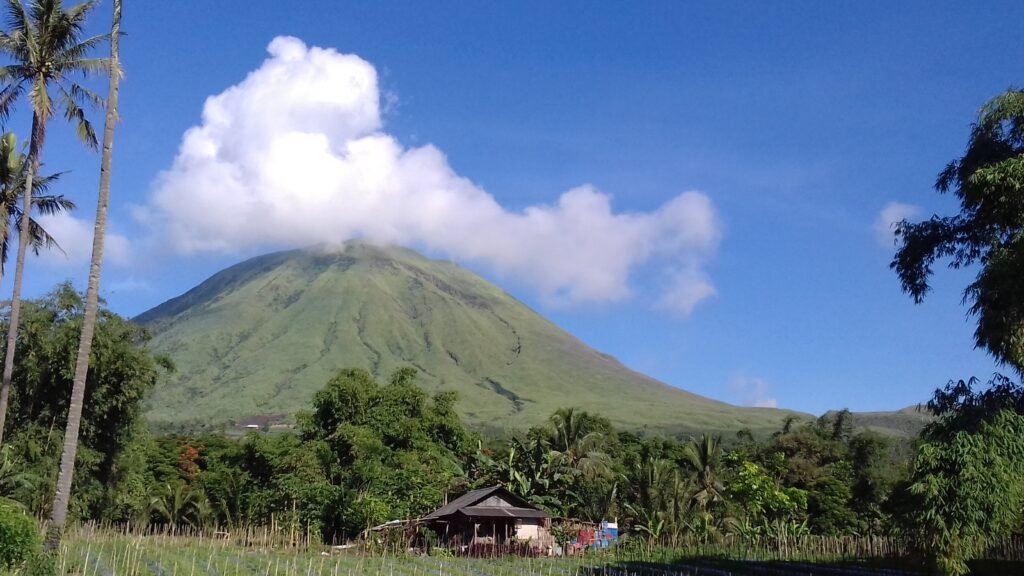
Those in search of elemental chaos would do well to hike Tomhon’s resident volcanoes. For many, the twin-volcano Lokon-Empung is the literal and metaphorical high point of a trip to Tomohon. Rising over the Tondano Plain and about an hour’s walk to the west of the city, visitors will find volcanic rocks and reams of smoke that belch from sulphur-tinged fissures that only hint at the destructive power beneath. On a clear day, views from the vocano’s peak reach Manado to the north.
The ‘other’ major volcano in Tomohon, dormant Mahawu lacks the size of Lokon-Empung but not the awe. The smaller crater, flanked by two pyroclastic cones, allows for fine views of the landscape. Some say the views reach as far as Pulau Bunaken to the north, and birdwatchers will have much to interest them on the green summit.
The more foolhardy may be tempted to try cap tikus, a tipple fermented from palm sugar. It is a fun drink, and very strong, that leaves the user with heightened sense of awareness and removes all sense of, well, sense. An evening on the stuff will facilitate a most destructive hangover; treat with supreme caution, but don’t deny yourself if you fancy a draft or two.
Manado
The second-largest city in Sulawesi, outsized only by Makassar, Manado has known many names. The Spanish called the city Manados, while the Portuguese knew it as Moradores or Manada, or ‘herd of islands’.
There are many things to pass the time. Those with an interest in the fixings of spirituality may choose to visit Ban Hin Kiong, a historical Taoist temple and a place of much abundance and blessings. The temple, Manado’s oldest, has survived renovation and immolation, perhaps a sign that it lies under the watchful gaze of Shouxing, the God of Longevity.
Equally striking is the Yesus Kase Berkat, or Christ Blessing, statue. It dominates the view like the Cristo Rei statue of Dili, Timor-Leste. If one can equate the size of a monument to the depth of feeling it symbolises, this imposing 50-metre statue, found in Malalayang, shows that faith runs deep and true in Manado. A statue in the heart of Manado also immortalises Maria Walanda Maramis, another Indonesian hero, who advanced women’s rights in the 20th century.
Nature
A person can pass their time in North Sulawesi in many splendid ways. If they head northeast from Manado for 40-ish miles, they will find Tangkoko Nature Reserve, which takes its name from a volcano. The reserve protects many endemic species, including tarsiers and macaques. Fears may arise, however, about the cruel reach of nearby hunting and habitat destruction, and the effects on these creatures.

Diving
Close to Tangkoko is the city of Bitung, from which it is possible to reach the Lembeh Strait, a place favoured the world over for its muck-diving and photogenic waters; the things that live inside this water are just as pretty. Little needs to be said about the island of Bunaken, to the north of Manado, except that the seawalls are steep, its crevices deep and inhabitants varied, while rumours of mermaids, orcas and the machinations of spirits give the island a far-off, bubble-like quality.
When to Go
Temperatures remain pleasant all year round. The driest months tend to fall between July and October. At this time, the tourism high season extends from June to September. Expect room prices to rise a lot in this time.
Useful Transport Information
Aside from walking, visitors will soon get used to other modes of transport in the region.

Ubiquitous blue mikrolet vans swarm around on their set routes while ojeks, the iconic Indonesian motorbike taxis, weave in and out of traffic.
Horse-drawn bendi carts are another option. They stick to main routes and cost around 3,000 IDR a trip. Manoeuvrability may prove tricky, as can the rickety carts. And questions may well arise about how well the horses are looked after. But if all goes well and animal welfare is established, journeys on these carts make for a nice way to get from a to b.
2026 update: Price will have changed since this story was first researched in 2017. They’re useful as rough estimate, but don’t treat them as gospel.
Discover more from Eye in the Middle
Subscribe to get the latest posts sent to your email.