This page has affiliate links. If you click and buy something, EitM might earn a small commission, at no extra cost to you, the reader. As always, thanks for reading.
Lake Sarangan Lore: Dragons, Eggs and Enchantment in East Java
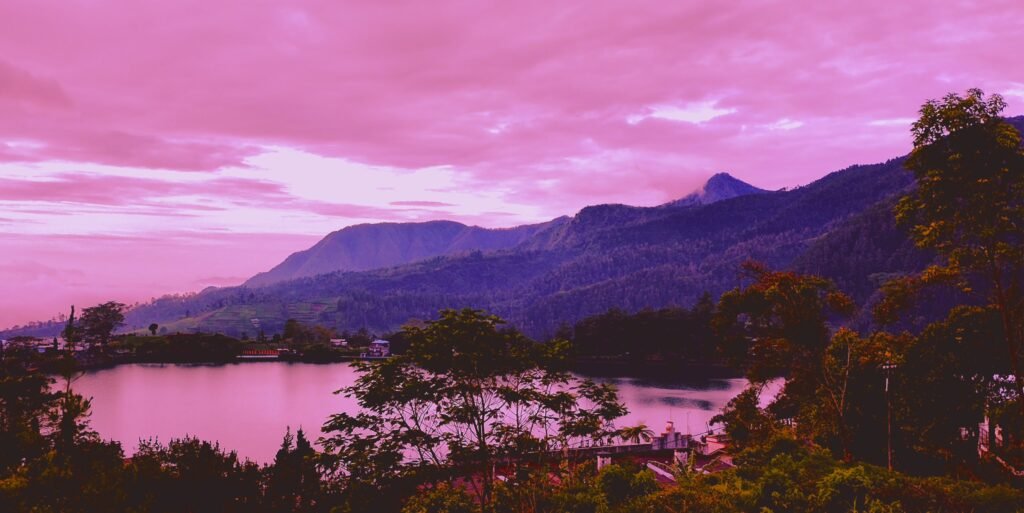
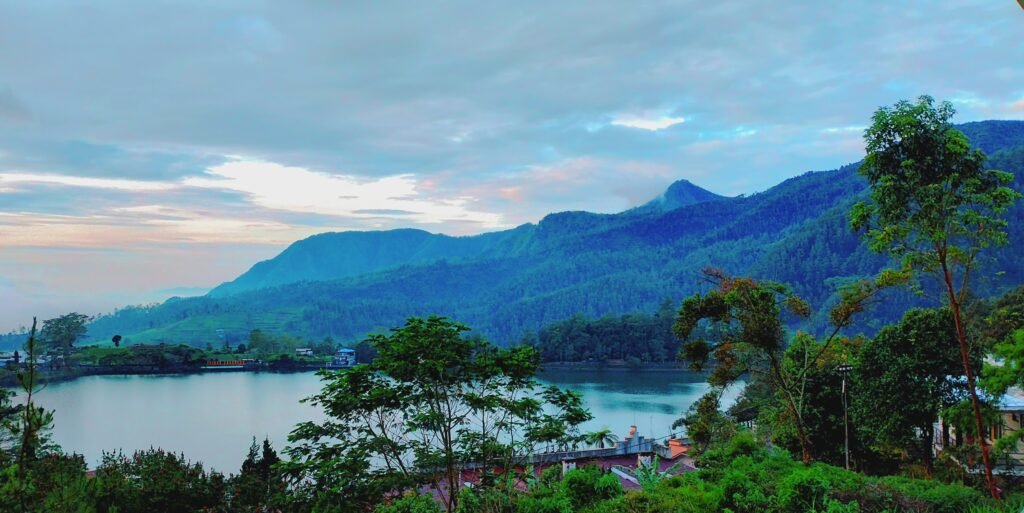
Lake Sarangan rests in the hills of Jawa Timur, close to the border with Jawa Tengah. It is a fine place with refreshing, clean air and a slight chill that somehow warms the bones. And the story of the lake’s formation is amongst the most interesting in all of East Java.
Those who reach the highest lake in Kabupaten Magetan will find a place that has more than a few names: Lake Sarangan, Telaga Sarangan, Telaga Pasir. And high above the body of water rears impressive Gunung Lawu, which oversees this corner of East Java with the aloof grace of all volcanic peaks. Lawu is a law unto itself. It wears a crown of lenticular clouds, and it never takes off its regal headpiece.
Lake in the hills
These things, though, will remain a mystery to the newcomer. First, they will have to reach the lake. This they can do from Kota Magetan to the east, although some prefer to come from the west, via Tawangmangu. But regardless of direction, the visitor will soon find the beauty of Java’s landscape. And if they stay a while, they may find that the crisp ambience and verdant shades settle their spirits.
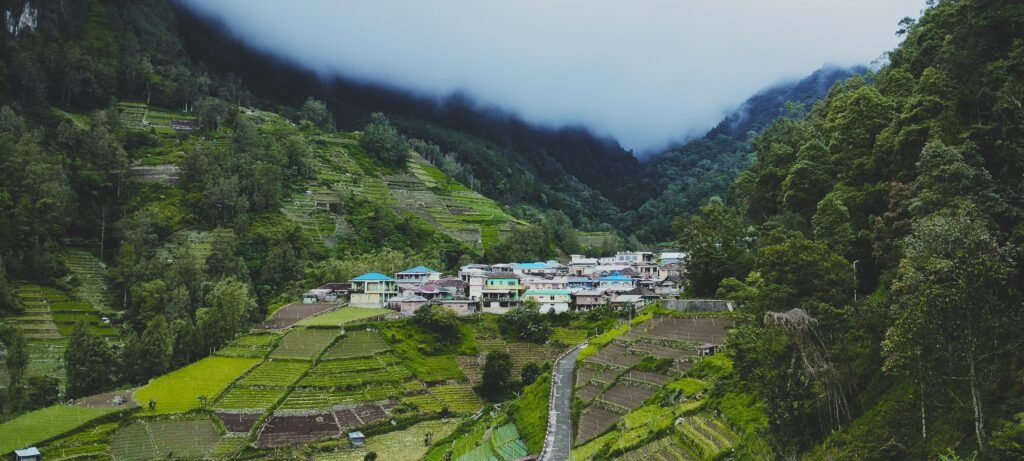
As the roads turn and twist, and climb higher into the sky, the air starts to thin. This matters not, though, because the dark green rice fields and grey skies soon command attention. The richness of the land’s colour suggests it benefits from generous and regular rainfalls, and the threat of a looming storm hangs ever-present in the air. It is an elemental feeling that refreshes the skin and revives the spirit. And the sensation grows more potent the closer one gets to Lake Sarangan, 1,200 metres above sea level.
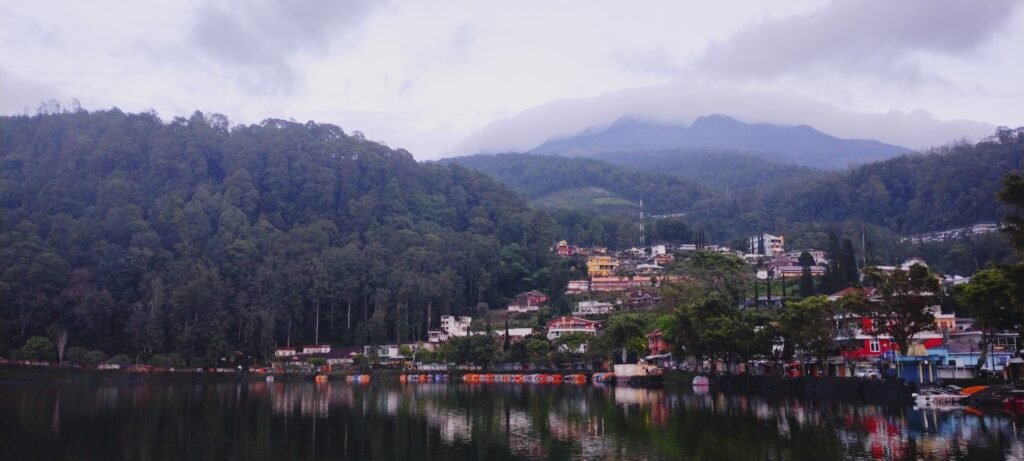
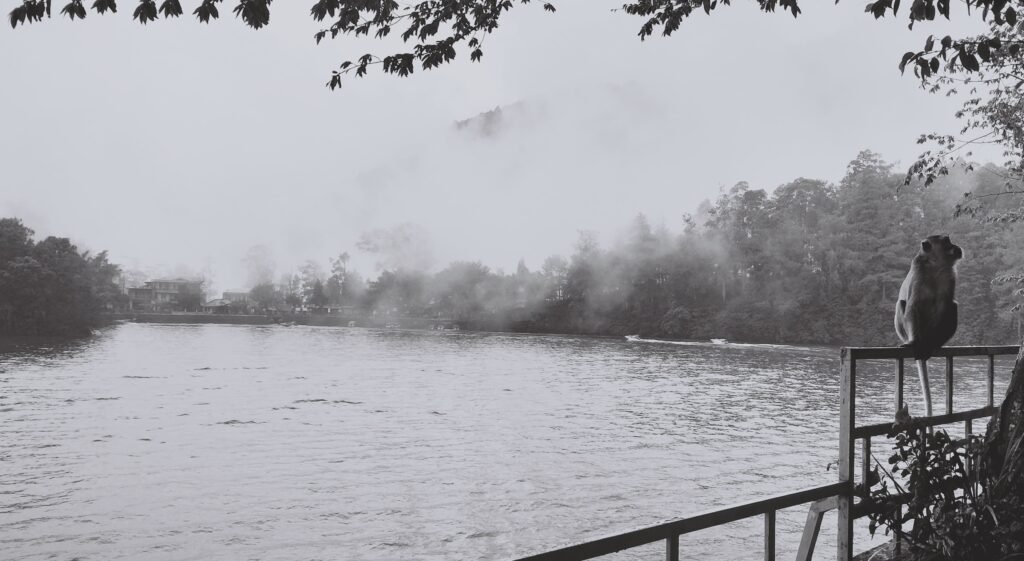
Upon arrival in Plaosan, the visitor will find a place of stunning beauty and calm. On one corner of the lake lies a village, with the rest of the water encircled by walkways and thick forest. From these woods growl many animal calls, including those of the mean macaque monkeys, which like to drop out of the trees and bear their teeth at passers-by.
Misty Lake Sarangan
Beyond this circle lies a deep valley, where villages, rice terraces and waterfalls like Tirtosari await. In the rainy season, a fine vapour foretells a downpour. It pervades the air all around the lake, and it leaves the impression of a place very much soaked to the skin. And when the rain finally does come, it does so torrentially, as if powered by a jester that would expel heavy rainfall as it saw fit.
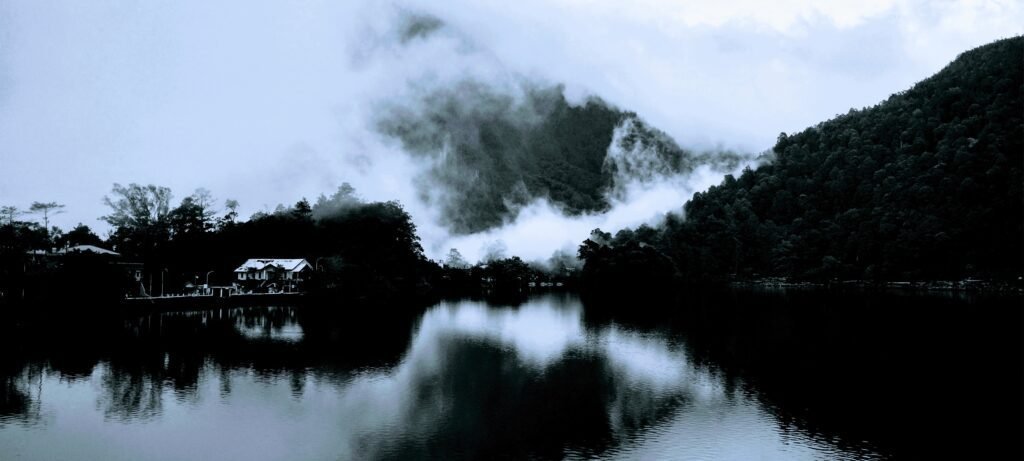
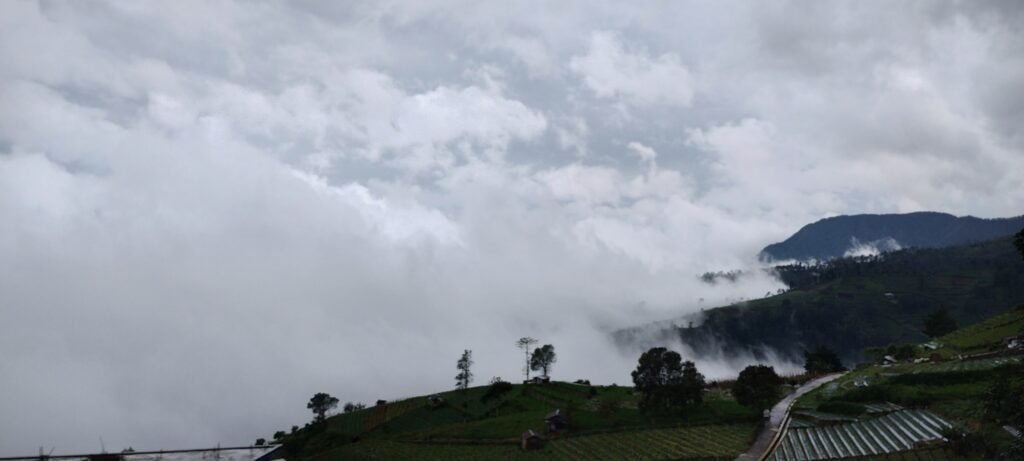
The elements in Sarangan behave as they do nowhere else. Thick clouds of fog quickly form and become all too thick to see through. It seems as though the haze, having smothered the entire area, has coated Lake Sarangan in marble. Even the volcanic monarch does not escape the fog’s reach. When the mist falls, Lawu becomes swallowed by the weather until it too disappears.
But then the swirl clears as quickly as it forms, like it never existed at all. Thus baffled, the visitor, who has seen the landscape fade and then reappear in a matter of seconds, questions whether the place has deranged their senses. And as they walk, the visitor finds that the gloom of stillness haunts the area. It creates an air of remoteness quite unlike anywhere else in the archipelago. The inhabitants and visitors to Lake Sarangan buzz with the same energy so often felt in the rest of Java. But a kind of reserve tempers this feeling, as though the fog has sapped energy from the place, leaving in its wake a fleeting sense of connection that vanishes with no trace.
Perhaps, the visitor wonders, Lake Sarangan detached itself from the earth and now floats in the sky. Certainly, the mist has removed the rest of Indonesia from view. And if this visitor were to stand on the edge of the bus terminal and try to break through the cloud cover swirling around them, they would surely see the rest of Java float away below them. Nowhere else seems to exist except the lake, the mountain and the valley.
Lake Sarangan, then: a fine place for those in search of solitude. Where better to wander than into the fog to become lost and withdrawn? And within this fog swirl the strands of many stories, not least the tale of how Lake Sarangan came to be.
Read More: Dieng Plateau: Temples and Rich Culture in Central Java
The story begins
Please remember, O wise reader, that this is but one telling, with themes of age, legacy and the whims of winged beasts. The story begins, as all these things do, long ago in the distant past. The place has not changed, for this tale takes place on the slopes of Mount Lawu, the monarch mountain that straddles two Javas: East and Central.
But the observant will see how the landscape differs. It is flatter and less waterbound. And while the valleys and steep drop to the rest of Java remain, the observer of this bygone time would struggle to match things then with things now.
Kyai and Nyai Pasir
The story told that many people and creatures worked the land of Lawu, and all had interesting things to tell. But for now, the focus remained on a couple. Both had long passed middle age, and they now walked the path to venerable elderhood. Their names were Kyai Pasir and Nyai Pasir, and they lived off the land. Kyai hunted animals and tended the fields, while Nyai cared for their home. She cooked and cleaned and warmed the hearth for when her husband Kyai returned from a long day of toil.
Neither peak nor valley distracted the pair. Their days followed one another with not much variation, and time began to blur. And while this inertia suited some people, those content with their place in life, Kyai and Nyai soon wondered if the little they had was really what life was all about. They started to think, which, as everyone knows, is a terrible thing indeed.
Things had not yet become desperate, but intrusive thoughts had formed and settled in the back corners of their minds. And these thoughts voiced themselves with increasing reverberation and echo. They started as a mew, then turned into a moan and ended as a roar. Kyai and Nyai never spoke of what they heard. But all who knew them noted that the pair often spoke of what would remain after they had gone.
Read More: Kampung Pelangi Semarang: The Rainbow Village of Jawa Tengah
Time for a change
Kyai and Nyai had no children. And like most couples unencumbered by the responsibility of child-rearing, they basked in their freedom, however modest their circumstances may have been. Rarely did Kyai and Nyai look up to the sky. ‘Our means to survive lay buried in the earth,’ they would say. ‘What need do we have of what waits above? We know when it’s dark, and we can tell when it rains. That’s enough for farmers such as we.’
Many applauded this practical attitude. The same applauders, though, did not tell Kyai and Nyai of the dangers they faced when they only looked down. Perhaps, people thought, if the farming couple had paid a bit more attention to what happened above, they could have dodged many painful mishaps.
For one thing, Kyai and Nyai would have glimpsed Time and Tide, the gleeful and wicked pair of imps, hiding within the clouds. And they would have heard Time and Tide murmur to each other and suppress malicious crowing. Most of all, the sudden pangs that Kyai and Nyai felt in their chests would have made much more sense.
Question of legacy
They would have seen Time or Tide produce a quiver of two arrows. It would have been no secret that this unseen imp then handed the arrows, which had splendid red and good feathers but were otherwise not very striking at all, to their companion. The unearthly archer nocking the arrows in the bow and, without paying much attention at all, firing them at the aged couple below would have made so much more sense.
All this Kyai and Nyai would have seen, if only they had bothered to look skyward. And then they would have known something strange was afoot. They could have trodden with care for a while to avoid any chaotic happenings. But no. Life never works out this way, and imps like Time and Tide always like to make things more complicated than they need to be.
All Kyai and Nyai knew was that, from nowhere, a sudden regret formed. They had no children. What would their legacy be? The thought gnawed at them for many days, until the shadows of an awful emptiness consumed their every waking moment. They could think of nothing else.
This, though, was a time of great spirituality, and people of faith could often divine answers to most things, especially personal crises. And when these pious leaders couldn’t come up with any useful answers, they did at least know how to say the right thing to calm their flocks’ nerves. Kyai and Nyai went to meditate. They sought an answer to their growing woe.
Read More: Pulau Garam: Unravelling the Strands of Madura Island
Plea for help
At the time, Hinduism reigned in this corner of Java. It made sense, then, to ask the omnipotent Sang Hyang Widhi Wasa, the Supreme God, for help. The benevolent deity heard their plaintive call and deemed it worthy to intervene. And soon enough, biology and faith intertwined. Kyai and Nyai had a child, whom they named Joko Lelung.
Now they had an heir, Kyai and Nyai had to work twice as hard. Not that they cared, however. They had a descendant, and their blood would continue to flow long after they had passed on. Life, though, did not get any easier. As much as they savoured family life, stress still grew. The couple decided to meditate again, this time asking the Supreme God for continued health and long lives, so that they could watch their son grow and blossom.
This Sang Hyang Widhi Wasa granted. But this time, the deity named a condition. The couple perceived a voice from above. It was calm and composed and as large as anything they had ever perceived, so that it dwarfed the landscape and swallowed the entire globe upon which it rested.
‘Nothing too drastic,’ the colossal noise said to them. ‘All you need to do is find the eggs in the field and eat them. That way, you can have very long lives. As long as you wish, in fact.’ And with this, the huge voice fell forever silent.
Kyai finds an egg
But still, ominous interludes aside, Kyai and Nyai had a new purpose. They had something to break up the long days and nights tending the field and caring for the home and raising the child. Kyai in particular felt a verve he had not felt in years.
‘What an exciting development,’ he muttered to himself as, ploughing the earth, he kept half an eye open for the mysterious eggs. ‘There aren’t any birds or crocodiles or anything else that can lay me an egg, even if I asked politely. But now there are two eggs for me to find.’
One day, Kyai received an unexpected note. He didn’t recognise the handwriting, and he was a bit shocked when the note seemed to vanish as soon as he read it. Apparently, so the note told him before rendering itself invisible, the nearby planting field also belonged to him. This was a shock, but also a boon. The new field was covered in healthy earth, and it would produce a great deal more crops for the Kyai and Nyai to sell and eat.
But first, Kyai would have to clear the field. It had lain unused for such a long time, and the tree and the shrubs and the thickets had long fought a battle to claim dominion over this patch of land. Kyai, though, was the most dominant of all these things.
He vanquished the shrubs and he obliterated the thickets until only the trees remained. These he attacked with terminal intent, until not even a stump remained on the ground.
What are these?
Now he could grow as many crops as he could. The thought shimmered in his mind, and it filled him with excitement. And he felt a jot of surprise when the same shimmer seemed to leave his body and settle upon a corner of the field he had yet to investigate.
And what should he find there, an observer may think, but a pair of eggs. Not that these were any eggs that Kyai had ever seen before. They seemed more circular and less ovoid and curved than he was used to, and of such a great size that no known animal could have laid them.
‘These are as large as my head and just as heavy,’ the farmer said to himself. The find had shocked him, as did the fact that scales as thick as armour covered the eggs. The farmer had to make a few trips, and with more than a few helpers, to ferry the eggs back home.
It took Kyai and Nyai a long time and many hammers and mallets to smash these protective plates. But persistence paid off, and finally, the pair had before them two eggs as promised by the Supreme God. The eggshells were as white as snow and gave off a feeling just as pure. Beyond these eggs lay the secret of long, healthy lives. A nameless yearning, like the excitement of seeing a new place, sat in the pits of their stomachs.
A promise is a promise
Not wishing to offend Sang Hyang Widhi Wasa, the couple did as they were bidden. Nyai found a cauldron and boiled the eggs. This took many days, on account of the eggs’ size and the unusual amount of time it took them to heat up. But heat always has its way, and soon enough, the eggs were cooked.
The eggs were so unusual, and their fillings so plentiful, that Kyai and Nyai fell asleep the moment they finished eating. The pair could not even tell anyone the colour of the egg yolks, only that it took them hours to eat the thick, runny insides, and that they needed large knives to carve up the gloopier parts.
But eat the pair did, and they did eat well. The act exhausted them, though, and they felt curiously tired. Kyai and Nyai quickly drifted off into long and dreamless naps, and they had no idea of the changes that would befall them when they awoke.
Strange effects
Their sleep lasted a good couple of days. Upon returning from the realms of drowsiness, Kyai and Nyai felt refreshed and invigorated. Almost like they had become something new, in fact. Both felt their insides churn and broil, as though their insides had suddenly become a violent, stormy ocean. But they put this down to their unusual feast, and thought that a bit of fresh air and water would settle them down.
Kyai returned to his fields with Nyai in tow. Their planned tonic had not worked, though, and both made most peculiar complaints once they got outside.
‘I feel dizzy and foggy,’ Kyai, shielding his eyes from the sun, said to his wife. Not to be outdone, and feeling a bit competitive, Nyai told Kyai that yes, she felt those things too. ‘But, I also feel itchy and very hot, and I could very happily scratch my entire skin off and not feel a thing. Can you say the same thing, husband?’
Kyai hesitated and furrowed his brow. ‘Er… well, yes, of course I can. I feel those things you just mentioned, but also, on top of that…’ But then Kyai stopped briefly, as though a vacuum surrounding him had suddenly burst. His throat was burning, and he had wanted nothing more in his life than a soothing glass of water. And then he never spoke again.
Painful transformation
If his brain hadn’t suddenly begun to short-circuit, Kyai would have noted his wife frantically motioning. However, her movements had no pattern, and she had no message to share. Time and Tide, looking down from their clouds, looked at one another and smirked. They enjoyed watching the aged couple in obvious distress. It seemed that their jerks and shakes only served to relieve the unbearable pressure that crushed their entire bodies.
All this Kyai would have comprehended if he hadn’t started to scream. He did so in great pain. At any other time, he would’ve been pleased to see his wife doing the same thing in the spirit of love and devotion and sharing. She wailed as loudly as he, and it was a sound neither had ever heard before.
The noise scraped and built and collapsed under its own weight, like a mountain yelling in pain. This chorus of agony rang across the entire land. All sane and living things ran as far as they could from the unending din. The couple’s yells invoked panicked images of the birth pangs of a continent.
Kyai and Nyai flung themselves to the ground, as though stung by the most venomous creature imaginable, and the pain had removed their sanity. They flailed hither and thither, and they could not contain the seismic shifts that pulsed through them. But neither could plead for help. Their screams had torn their vocal cords and ripped the skin from their throats.
Kyai and Nyai turn into dragons
It’s a shame, because Kyai and Nyai were going through a magnificent transformation. But tragically, nobody and nothing saw. The pair grew and grew until they assumed gigantic proportions. Their skin became scaled and mantled, like the coating of the giant eggs, and their noses grew long and snouty.
Both wobbled under the weight of these new dimensions, not realising that they had grown many tens of feet taller, and just as wide. They couldn’t see each other’s eyes, but it was clear that they burned redder than fire.
Atop their heads grew giant horns, and behind them flopped an enormous tail that flicked to touch the great, veined wings that had sprung from their backs. They had turned into dragons. If they still had the power of conscious thought, they would have found it a splendid thing indeed.
Sadly not, though. Kyai and Nyai, if they could still be called that, continued to flail and roll on the ground. Pain still rocked them, and their heavy bulks had begun to carve out a hole in the earth.
Their rolling became only more intense, and the hole mirrored this intensity. It became so deep, in fact, that the giant dragons soon disappeared from view. And all the while, the sound of gigantic scrapes and groans and scratches filled the air as the craterous pit took shape.
As is the way of these things, water soon found a way to fill the hole. This it did, and with great success, until it filled the crater to the brim. And like any true artist, the water left a maker’s mark, in the form of an island at the lake’s centre.
Back to human
Little needs saying about what became of Kyai and Nyai Pasir. For a short while, the anger of their change overtook their sense, and they hatched a plan to drown the monarch Lawu. But thankfully, their son Joko Lelung was a wise young man. He pleaded with Sang Hyang Widhi Wasa to reverse what happened before it was too late.
‘If you can find it within yourself, O Supreme God, make my parents man and woman again,’ said Joko. ‘They didn’t understand what would happen, and it helps no one if they rampage about the place, causing damage and trying to drown mountains. There are already dragons to the east of this land, and they are strong, marvellous things. I don’t think we need any more.’
This plea chimed with Sang Hyang Widhi Wasa, who happily reverted Kyai and Nyai back to their original forms, with no memories of what had happened. They went about their lives, not knowing their role in the formation of Lake Sarangan.
Nowadays at Lake Sarangan
But glimpses remain of how the lake came to be. Legends tell of a pair of dragons that still guard the lake. Under their auspices, the island sits grand and still and dignified, the final resting place of Joko Lelung, who became a person, so they say, of great standing. A holy man who rides a white tiger guards the island, but no earthly person has ever seen these figures. And there ends this portion of the life of Lake Sarangan.
Things to know
Accommodation
There’s plenty of choice around the lake. RedDoorz near Sarangan Lake was fine for our needs: close to the action, easy to find, on the budget end of the spectrum, ensuite, clean. WiFi was sketchy and unreliable. Try and get a room overlooking the village for a nice view of the moody skyline when the clouds roll over ominously.
Getting there and away
Theoretically, passage to and from Sarangan is simple. A bus from Ponorogo via Magetan deposited us at Lake Sarangan and a Grab ride took us over Lawu to Tawangmangu. Bear in mind, though, that the buses didn’t seem to have a regular schedule during the low season, and you’re not guaranteed to find a driver on Grab or Uber or Gojek. It’s a bit out the way, is what we’re saying, and potentially a bit of a hassle to reach/leave.
Food
There’s plenty of restaurants and warungs to get food. Depot Wijaya on Jl. Raya Telaga Sarangan served up a nice bit of ikan bakar and, on the opposite side of the road, the warung run by the excellent and hospitable Kasmin had all the nasis and mies and gorengs you could hope for. Satay peddlers wander the streets and, presumably, so do bakso geropaks. Food won’t be an issue.
Dragon-catchers
Dragon-catchers are in short supply during the low season. Certainly, EitM encountered none during our week by the lake. Admittedly, that was low season, however, and visitors might have more luck in the high season.
Continue Reading: EitM’s Lore Series
Continue Reading: EitM’s [Very] Vague Guides
Discover more from Eye in the Middle
Subscribe to get the latest posts sent to your email.